The comparison, in one table
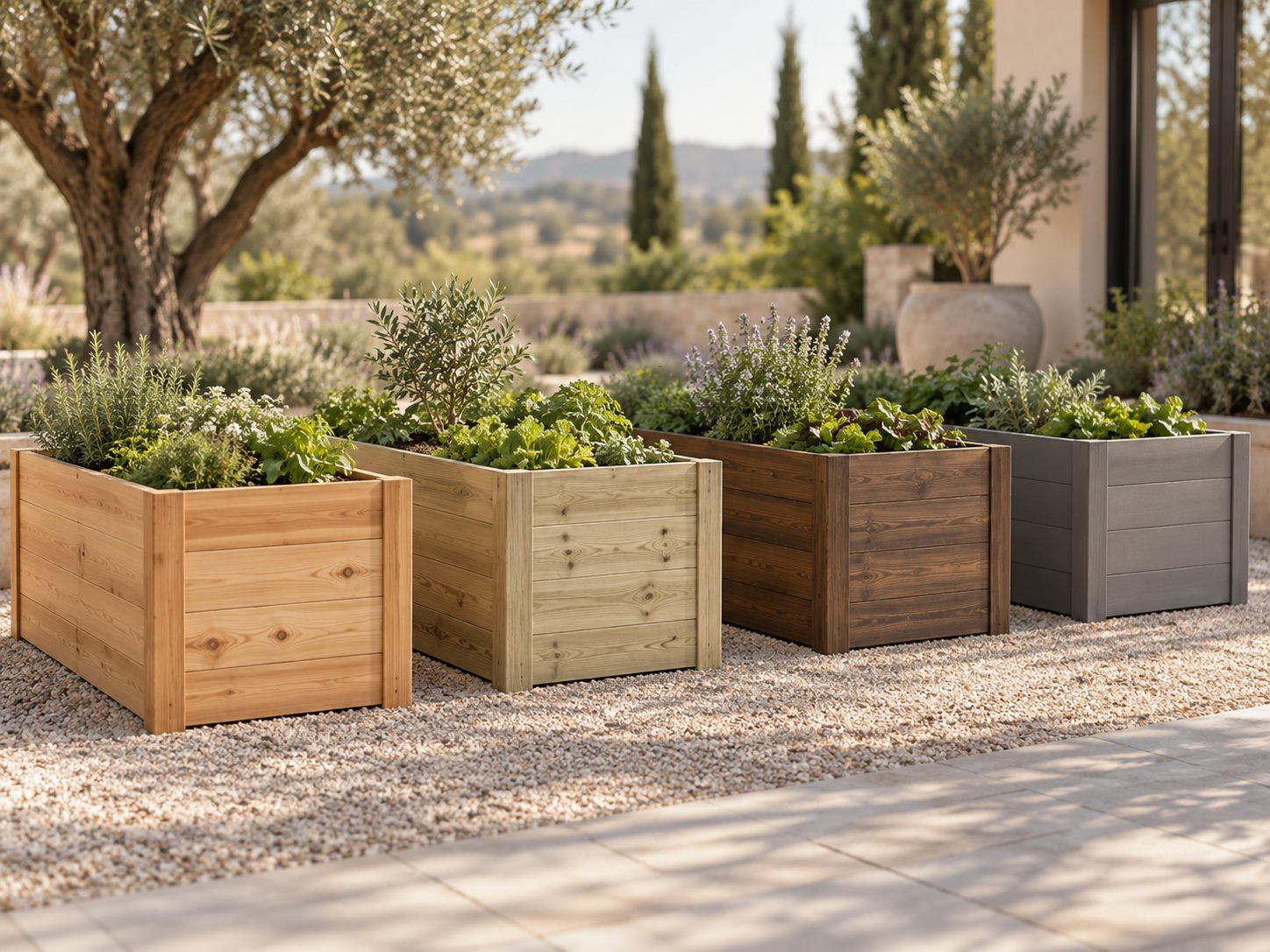
Untreated larch and thermally modified timber give you a chemical-free story at 8–15 % more cost; ACQ pine gives you the durable volume product at the lowest price; composite gives you a zero-maintenance claim with a different HS code and different freight.
| Material | Service life (above ground) | FOB impact | Claim you can make | Watch out |
|---|---|---|---|---|
| ACQ-treated spruce/pine | 6–10 years (class 3) | reference | Pressure-treated for ground use, EN 335 class 3 | Green cast; needs a liner for veg use; repaint at 2–3 yrs |
| Siberian larch, untreated | 8–12 years | +8–15 % | Naturally durable, no chemical treatment | Greys unevenly; knots vary; price tracks Russian log markets |
| Thermally modified pine | 8–10 years (class 3) | +12–18 % | Chemical-free, modified at 212 °C | Brittle. Must be pre-drilled; surface can furrow |
| European oak | 15+ years | +45–70 % | Heritage durability | Tannin staining; heavy; a price-band problem |
| WPC / composite boards | 15+ years | +35–60 % | Zero maintenance, recycled content where verified | Not wood, different HS; flexes at spans over 900 mm |
| Galvanised / zinc bed (not wood) | 15+ years | +20–40 % | Recyclable metal | Heat on south faces; not our factory. We will refer you |
The food-safety question, answered without evasion
A liner between soil and treated timber is the accepted construction for vegetable beds, and organic-input certification bodies remain divided on treated materials — so the claim, not the timber, is your commercial decision.
- ACQ replaced CCA for consumer use across the EU and US markets; copper and quaternary ammonium, no arsenic. With a liner, this is standard practice for vegetable beds.
- PEVA or LDPE liner: we quote food-safe PEVA (no phthalates) for herb and root-vegetable lines as a thin per-bed adder.
- Untreated larch or modified timber is the clean route where your customer will not accept treated wood; it costs 8–18 % and lets you write the sentence on the box.
- What we will not print: 'organic approved' or 'chemical-free' on a treated SKU, and we will not let a customer's own artwork do it either. That is not modesty, it is the difference between a returned pallet and a recalled one.
Why beds fail, and the three details that matter
The bottom rail sits in wet soil, the bracket carries nothing, and the liner seals the wood against the ground. Fix those three and a 20 mm ACQ bed outlives a badly built larch one.
- 6 mm base drainage gap so the base boards are not sitting in a saucer of water.
- Liner stops short of the timber-to-ground contact line. Otherwise you have built a compost pocket.
- A real corner bracket: 1.5 mm galvanised minimum, 2 mm powder-coated for premium, carrying the lateral load of saturated soil (about 130 kg per linear metre at 750 mm depth).
- Board thickness matched to depth: 16 mm to 300 mm deep, 20 mm to 450 mm, 28 mm T&G beyond, with a mid-rail above 600 mm.
Matching material to your shelf price
| Retail band | Construction we recommend | Where it sells |
|---|---|---|
| €14.99–€19.99 | 16 mm ACQ, geotextile liner, bracket | Promo weeks, garden-centre entry |
| €24.99–€34.99 | 20 mm ACQ or larch, PEVA liner, printed carton | The volume vegetable-bed shelf |
| €39.99–€59.99 | 28 mm T&G larch or modified pine, mid-rail | Independent garden retail, online premium |
| €69.99+ | 750–900 mm elevated bed, modified timber, charred facing | Accessible gardening, hospitality, design-led |
Basis
Service-life figures are observed field performance for the stated use classes and typical Northern European and North American climates; they vary with ground conditions, drainage and maintenance. Cost impacts are our own FOB references, October 2026. EN 335 defines use classes 1–5; treat any supplier's 'years' claim as an estimate tied to a class, not a guarantee.